
You see stainless steel lug butterfly valves used everywhere in industrial fluid control. These valves handle tough jobs because of their strong design, easy operation, and ability to work with many fluids. The global market for these valves reached about $4.5 billion in 2023 and keeps growing as industries need better fluid control. Many companies choose this valve for its excellent sealing, bidirectional flow control, and cost-effectiveness. ZT Valves' product stands out with its advanced features and wide application range.
Key Takeaways
Stainless steel lug butterfly valves are essential for controlling fluid flow in industries like oil and gas, chemical processing, and water treatment.
These valves offer excellent corrosion resistance, making them ideal for harsh environments and reducing maintenance costs.
The simple quarter-turn operation allows for quick opening and closing, enhancing efficiency in various applications.
Choosing the right size and material for your valve is crucial for optimal performance and safety in your system.
ZT Valves provides custom solutions and expert support to help you select the best valve for your specific needs.
Industry Overview
Key Sectors
You find stainless steel lug butterfly valves in many important industries. These valves help you control the flow of liquids and gases in places where safety and reliability matter most. You see them in oil and gas pipelines, chemical plants, power stations, and even on ships. Each sector needs strong valves that can handle tough conditions.
Here is a table that shows how different industries use these valves:
| Industry | Application Description |
|---|---|
| Oil & Gas Industry | Utilized in upstream, midstream, and downstream pipelines for strong sealing and robust construction. |
| Chemical & Petrochemical Plants | Manages acids, solvents, and abrasive slurries with corrosion-resistant materials, ensuring process purity. |
| Power Generation | Regulates steam and cooling water in thermal, nuclear, and renewable plants under extreme conditions. |
| Marine Applications | Trusted for seawater and cooling systems in ships, providing reliable performance in harsh marine conditions. |
Tip: You can choose a stainless steel lug butterfly valve for any sector that needs high performance and durability.
Common Uses
You use these valves to start, stop, or control the flow in pipelines. Many factories rely on them to keep processes safe and efficient. You might see them in water treatment plants, where they help manage clean water and wastewater. In chemical processing, you use them to handle dangerous fluids without leaks. Power plants use them to control steam and cooling water. Ships depend on them for seawater systems and cooling engines.
You benefit from their easy operation and strong sealing. You can open or close the valve quickly with a simple turn. The stainless steel lug butterfly valve works well in places with high pressure or temperature. You get reliable performance, even in harsh environments.
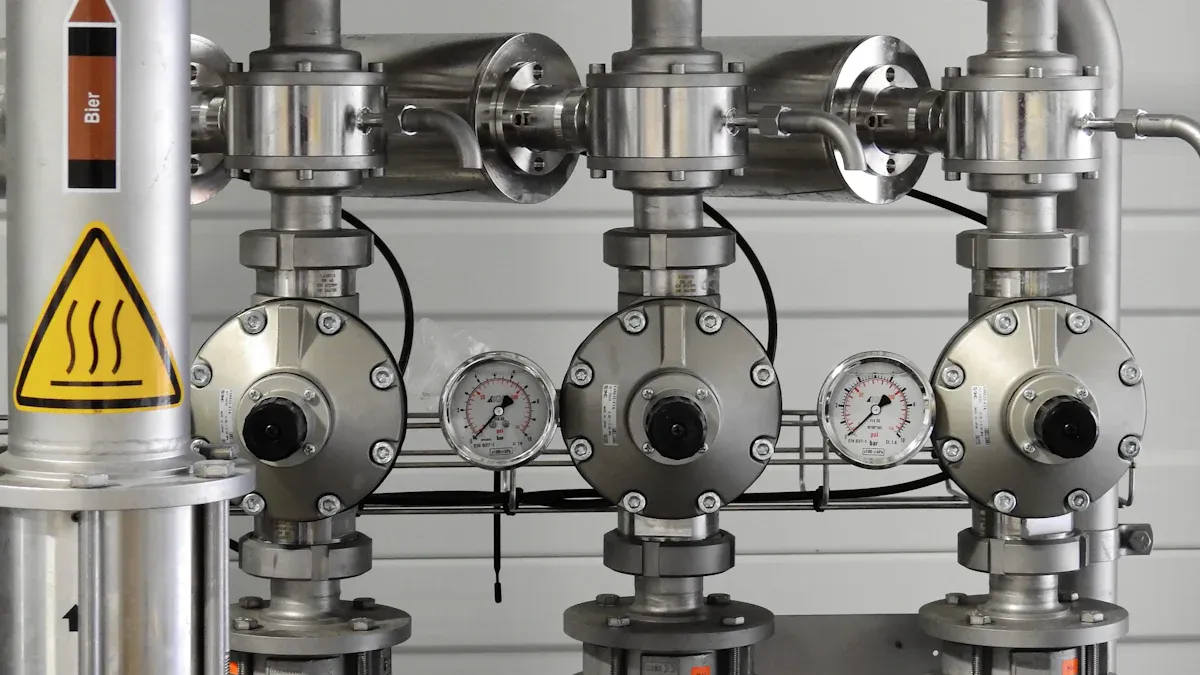
Stainless Steel Lug Butterfly Valve
Design
When you look at the design of a stainless steel lug butterfly valve, you notice several features that set it apart. The valve uses a strong disc or plate mounted on a shaft. This disc rotates to control the flow of liquids or gases. The construction is both strong and rigid, which gives you durability and reliability in many applications. You can choose from a wide range of sizes, from DN50 to DN1200, to fit your specific needs.
Here is a table that highlights key design features:
| Feature | Description |
|---|---|
| Strong and rigid construction | Provides durability and reliability in various applications. |
| Designed to handle higher pressures | Ensures performance in demanding environments. |
| Compatible with dead-end service | Allows for maintenance without affecting the upstream pipeline. |
ZT Valves ensures that each stainless steel lug butterfly valve meets important international standards. You get valves that comply with API 609, BS EN 593, and MSS SP-67. These standards guarantee strength, safety, and compatibility in your systems. Before you use the valve, it goes through strict testing. Hydrostatic pressure tests check for leaks and structural integrity. Seat leakage testing makes sure the valve blocks flow when closed. Operational tests confirm smooth movement across the full range.
Operation
You will find the operation of a stainless steel lug butterfly valve simple and efficient. The actuator rotates the shaft, which moves the disc. When you turn the handle or gear, the disc lifts to let fluid flow. If you rotate it further, the disc seals against the seat and stops the flow. You can also adjust the valve to control how much fluid passes through, which helps you manage flow rates with precision.
The quarter-turn design lets you open or close the valve quickly.
You can regulate flow easily, which saves resources and energy.
The valve needs little maintenance, so you spend less time on repairs.
Note: Following standards like API 609 and ISO 5752 ensures your valve works safely and fits well in your system.
Features and Benefits
Corrosion Resistance
You need a valve that stands up to tough environments. Stainless steel lug butterfly valves give you excellent protection against corrosion. These valves work well in places with acids, alkalis, or even seawater. You can use them in chemical plants, water treatment, or marine engineering. The stainless steel material keeps the valve strong and safe, even when other metals might rust or break down.
Stainless steel resists damage from harsh chemicals and salty water.
You spend less time and money on repairs because the valve does not corrode easily.
The valve helps prevent leaks, so your system stays safe and reliable.
Note: In marine settings, stainless steel valves last much longer than carbon steel valves. You get better performance and fewer problems.
Durability
You want a valve that lasts for years. The high-quality stainless steel construction gives you long-term durability. The valve keeps working, even when you use it every day. The sealing materials resist aging, so you do not have to replace them often. You get precise control and a tight seal, which helps your system run smoothly.
The valve's strong build means it can handle high pressure and temperature.
You avoid frequent replacements, saving you time and money.
The design reduces pressure drop, so your system works efficiently.
Easy Operation
You will find the valve easy to use. The lightweight, rotary structure lets you open or close the valve with a simple turn. The lug design uses threaded inserts, so you can bolt the valve to flanges without extra nuts. This makes installation quick and simple. You can also do maintenance on one side of the pipeline without shutting down the whole system.
The quarter-turn handle or gear gives you fast and smooth operation.
You can adjust the flow easily, which helps you control your process.
The valve's design avoids interference with nearby pipes, making your job easier.
Tip: The Stainless Steel Lug Butterfly Valve offers flexibility for many industries. You get dependable shut-off, accurate flow control, and easy maintenance.
Industry Applications
Water Treatment
You use valves every day in water treatment plants. The stainless steel lug butterfly valve helps you control the flow of clean water and wastewater. You can rely on its excellent corrosion resistance, even in high-salinity seawater or pipelines that carry chemicals. This valve works well for both municipal and industrial water systems.
You must follow important standards in water treatment:
NSF/ANSI-61: This standard keeps drinking water safe by regulating system components.
AWWA Standards: These ensure quality and performance in water treatment.
You can use this valve for food-grade purified water transport and in seawater desalination. The strong stainless steel body resists rust and damage from chemicals. You get a long-lasting solution that keeps your water systems safe and efficient.
ZT Valves supports you with custom designs. You can talk to specialists to choose the right materials and sizes for your project.
Tip: Choose a valve that meets NSF/ANSI-61 and AWWA standards for safe and reliable water service.
Oil and Gas
You need strong valves in oil and gas processing. The stainless steel lug butterfly valve handles high-pressure and high-temperature conditions. You use it to shut off or control the flow during oil and gas transportation. This valve gives you reliable performance, even when temperatures and pressures change.
Key benefits for oil and gas:
Handles high pressure and temperature.
Provides reliable shut-off and throttling.
Resists corrosion from harsh fluids.
You can trust this valve to keep your pipelines safe. ZT Valves helps you select the right design and materials for your oil and gas needs. You can work with their team to customize the valve for your specific application.
Chemical Processing
You face many challenges in chemical plants. The stainless steel lug butterfly valve helps you solve problems like erosion, flow instability, and sealing issues. You need a valve that can handle acids, solvents, and abrasive slurries without leaking or breaking down.
| Challenge | Description |
|---|---|
| Erosion and Cavitation | High-velocity flow can wear down valve parts. Pressure drops can cause bubbles that damage surfaces. |
| Flow Instability | Two-phase flow can make pressure and flow rates change quickly, causing vibrations and possible failures. |
| Sealing Issues | Gas and liquid phases make it hard to get a tight seal, which can lead to leaks and safety risks. |
You can use this valve for both simple and complex chemical processes. The stainless steel body resists corrosion and keeps your system safe. ZT Valves offers technical support to help you pick the best valve for your chemicals and process needs.
Note: Always choose a valve that matches your chemical's properties for the best safety and performance.
HVAC
You want to keep buildings comfortable and energy efficient. In HVAC systems, you use butterfly valves to control airflow and coolant distribution. The stainless steel lug butterfly valve helps you manage climate control across many floors. You can handle large volumes of fluid with little pressure drop, which saves energy.
Benefits in HVAC:
Regulates airflow and coolant for better climate control.
Handles large fluid volumes with minimal energy loss.
Keeps temperature and air quality steady in big buildings.
ZT Valves can help you select the right size and design for your HVAC system. You can ask for custom features to fit your building's needs.
Food and Beverage
You must meet strict hygiene and safety rules in food and beverage processing. The stainless steel lug butterfly valve uses 304 or 316L stainless steel for corrosion resistance. You can choose food-grade seals like EPDM, silicone, or PTFE. The valve's smooth, electropolished surface keeps bacteria from sticking.
Key hygiene features:
Electropolished surfaces with roughness below 0.8 µm.
Tri-clamp or weld-end connections for easy cleaning.
Meets food industry regulations for safety and cleanliness.
You can work with ZT Valves to customize the valve for your process. You can select the right materials and connections to meet your hygiene standards.
Tip: Always use valves with food-grade materials and smooth surfaces to keep your products safe.
ZT Valves supports you with:
Consultation with specialists to match your needs.
Custom design and material selection.
Prototype development and testing for your application.
Selection and Installation
Sizing
Choosing the right size for your stainless steel lug butterfly valve is important for safe and efficient operation. You need to look at several factors before making a decision:
Fluid Characteristics: Check the temperature, pressure, viscosity, and corrosiveness of the fluid.
Application Requirements: Think about the function of the valve and where you will install it.
Valve Size: Match the valve size to the flow rate and pressure in your system.
Material of Construction: Pick stainless steel for durability and corrosion resistance.
Cost and Budget Considerations: Balance your needs with your budget.
Environmental and Safety Requirements: Make sure you follow all safety and environmental rules.
ZT Valves offers technical design support to help you select the best size and type for your project. You can ask for custom solutions to fit your unique needs.
Compatibility
You must choose the right materials for your valve to ensure long life and good performance. The seat and seal materials affect how well the valve handles different chemicals and temperatures. Here is a table to help you compare common options:
| Material | Temperature Range (°F) | Chemical Resistance | Abrasion Tolerance |
|---|---|---|---|
| EPDM | –20 to 250 | Excellent with acids, caustics, steam | Moderate |
| BUNA-N | 0 to 200 | Good with oils, hydrocarbons | Moderate |
| Viton® | –10 to 400 | Excellent with oils, fuels, solvents | Moderate |
| PTFE | –100 to 450 | Outstanding with nearly all chemicals | High |
| Neoprene | –20 to 250 | Fair with oils, ozone, weathering | Low–Moderate |
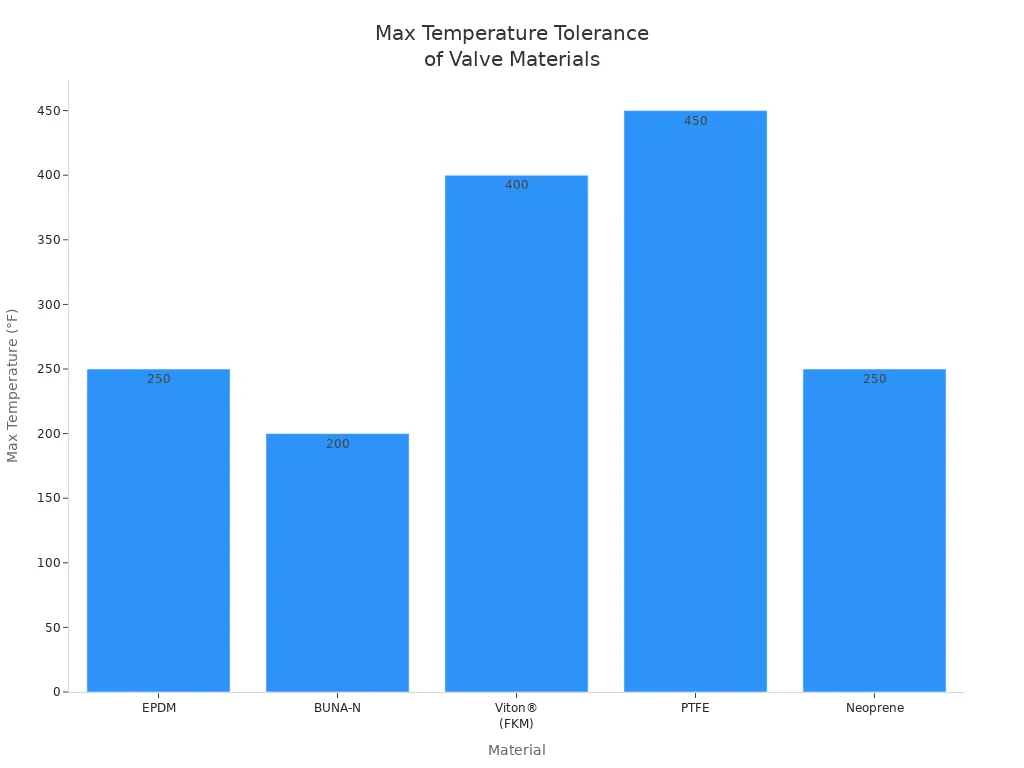
Material compatibility helps prevent leaks and damage. It also keeps your system running longer with less maintenance.
Best Practices
Proper installation ensures your valve works safely and lasts longer. Follow these best practices:
| Best Practice | Description |
|---|---|
| Follow Manufacturer's Instructions | Install the valve according to the flow direction and guidelines. |
| Consider System Stresses | Do not use the valve as a rigid connector between fixed points. |
| Thorough Cleaning | Clean pipe flanges to remove dirt and debris before installation. |
| Accurate Measurement and Adjustment | Check alignment and parallelism of pipe flanges with the right tools. |
ZT Valves supports you with OEM services, technical design, and fast after-sales help. You get order tracking and answers to your questions within 48 hours. This support helps you install and use your valves with confidence.
Tip: Always follow best practices and use the right materials for your application. This keeps your system safe and efficient.
You can rely on stainless steel lug butterfly valves for many jobs. You see them in water treatment, chemical processing, oil and gas, and HVAC systems. These valves help you control flow, handle tough fluids, and keep your system safe. ZT Valves gives you strong products, custom options, and fast support. When you choose the right size and material, you get better performance and longer life. Always follow best practices for installation to keep your system running smoothly.
FAQ
What sizes do stainless steel lug butterfly valves come in?
You can choose sizes from DN50 to DN1200. This range fits many pipeline systems. You should check your flow rate and pipe diameter before picking the right size.
How do I know if the valve is compatible with my fluid?
You need to match the valve's material and seat with your fluid type. Stainless steel works well with water, oil, gas, and many chemicals. For special fluids, ask ZT Valves for advice.
Can I install the valve in any position?
You can install the valve in horizontal or vertical pipelines. Make sure the disc opens and closes fully. Always follow the manufacturer's instructions for best results.
How often should I maintain the valve?
You should inspect the valve regularly. Clean the disc and seat to prevent buildup. Lubricate moving parts if needed. Regular checks help you avoid leaks and keep the valve working well.
Does ZT Valves offer custom solutions?
Yes, ZT Valves supports custom designs and OEM services. You can request special materials, sizes, or features. Their team helps you find the best solution for your project.
Tip: Contact ZT Valves for technical support or custom requests. They respond quickly and help you choose the right valve.