
Company Profile
WENZHOU ZHONGTOU VALVE/ZT VALVE is located in Wenzhou City, Zhejiang Province, a place with a very developed stainless steel industry. There is a well-established and mature supply chain here. Our founders have been in the stainless steel industry for over 30 years and have been exporting stainless steel products for over 15 years. We mainly export to over 30 countries in North America, South America, Europe, Asia and other states. With persistence and effort, we have become one of the leading enterprises of valves fittings and flanges in China.
Why Choose Us
Certificate
With its strong technical strength and sophisticated processing equipment, the company has passed ISO9001:2008 international quality system certification, as well as PVOC, CE, SGS and other certifications.
Quality Control
Because of the trust of our customers we have developed more and more, and we also hold a foundry, all for better quality control.
Production Market
ZHONGTOU VALVE has its own foreign trade sales department. It has been established for more than 20 years and has been exported to more than 30 countries, such as European countries, Spain, the United Kingdom, the United States, Iran...and Vietnam, Malaysia, Singapore and other countries.
Professional Team
1. 5 Engineers with average working lift more than 10 Years
2. Efficiency production arrangement to fast growth accordingly
3. We have very good and comprehensive after-sales service
-

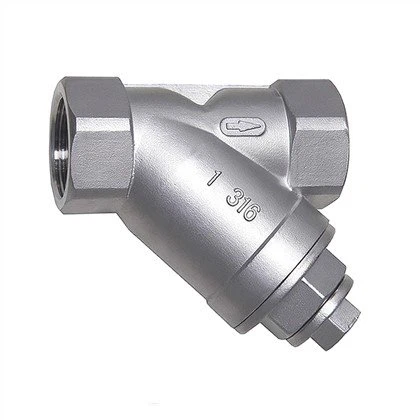
Stainless Steel Flanged Y-Strainer
Type: Strainer. Customized support: OEM, ODM, OBM. Place of Origin:China. Application: General Add to Inquiry
What is Strainer?
The Strainer is an indispensable device on the pipeline for conveying media. It is usually installed at the inlet end of the pressure reducing valve, pressure relief valve, water level valve, and other equipment of Fanggong Strainer. The Strainer consists of a cylinder, a stainless steel Strainer, a sewage discharge part, a transmission device, and an electrical control part. After the water to be treated passes through the Strainer cartridge of the Strainer screen, its impurities are blocked. When it needs to be cleaned, just take out the detachable Strainer cartridge, treat it and reinstall it. Therefore, it is extremely convenient to use and maintain.
Benefits of Strainer
01/
Equipment Protection
Strainers serve as a safeguard for pumps, valves, and other sensitive machinery by preventing damage from foreign objects or particles.
02/
Extended Equipment Lifespan
By reducing wear and tear on machinery, strainers help prolong the life of expensive industrial equipment, ultimately saving on maintenance and replacement costs.
03/
Improved Process Efficiency
Strainers maintain consistent flow rates and reduce the risk of pressure drops or flow disruptions, ensuring that processes run smoothly and efficiently.
04/
Reduced Downtime
Regular maintenance and cleaning of strainers can prevent unexpected downtime caused by clogs or equipment failure, thereby enhancing overall productivity.
05/
Enhanced Product Quality
In industries like oil & gas, and petrochemicals, strainers are crucial for ensuring that products meet high-quality standards by removing unwanted particles.
06/
Prevention of Corrosion
Strainers can help prevent corrosion in pipelines and equipment by filtering out corrosive particles.

Type of Strainer
Basket Strainers
Basket strainers, or bucket strainers, are essential for removing larger particles and debris from fluid flow. Named for their basket-like design, they use a perforated screen to capture debris, safeguarding equipment such as pumps, valves, and heat exchangers.
Y-Strainers
Y strainers filter out solid particles from gas, liquid, or steam using a perforated or wire mesh element. Their name comes from their Y shape, suitable for both horizontal and vertical piping systems.
T-Strainers
T strainers are custom-fabricated, T-shaped devices providing efficient filtration in pipelines, handling high flow rates.
Temporary Strainers
Temporary strainers are used during startups or maintenance to protect equipment from debris. They are cost-effective solutions for short-term filtration needs.
Inline Strainers
Installed directly into the pipeline to filter out particles without disrupting the flow. Beneficial in industries like pharmaceuticals, food and beverage, and petrochemicals.
How it works Strainer
When the Strainer is working, the water to be Strainered enters from the water inlet, flows through the Strainer screen, and enters the pipeline required by the user through the outlet for process circulation. The particulate impurities in the water are trapped inside the Strainer screen. In this continuous cycle, more and more particles are intercepted, and the filtration speed is getting slower and slower. However, the imported sewage is still entering continuously, and the Strainer holes will become smaller and smaller, thus generating a pressure difference between the inlet and outlet. When the pressure difference reaches the set value, the differential pressure transmitter transmits an electrical signal to the controller, and the control system starts the drive motor to drive the shaft to rotate through the transmission component.
At the same time, the sewage outlet is opened and discharged from the sewage outlet. When the Strainer is cleaned, the pressure difference drops to the minimum value, and the system returns to the initial Strainering state, and the system operates normally. The Strainer consists of a shell, a multi-element Strainer element, a backwashing mechanism, and a differential pressure controller. The diaphragm in the shell divides its inner cavity into an upper and lower cavity. The upper cavity is equipped with multiple Strainer elements, which fully utilizes the filtration space and significantly reduces the volume of the Strainer. A backwashing suction cup is installed in the lower cavity.
During operation, the turbid liquid enters the lower cavity of the Strainer through the inlet, and then enters the inner cavity of the Strainer element through the diaphragm hole. Impurities larger than the gap of the Strainer element are intercepted, and the clean liquid passes through the gap to reach the upper cavity and is finally sent out from the outlet. The Strainer uses a high-strength wedge-shaped Strainer screen, which automatically cleans the Strainer element through pressure difference control and timing control. When impurities in the Strainer accumulate on the surface of the Strainer element, causing the inlet and outlet pressure difference to increase to the set value, or when the timer reaches the preset time, the electric control box sends a signal to drive the backwashing mechanism.
When the backwash suction cup port is directly opposite to the Strainer element inlet, the drain valve opens, and the system is depressurized and drained. A negative pressure zone with a relative pressure lower than the water pressure outside the Strainer element appears between the suction cup and the inside of the Strainer element, forcing part of the clean circulating water to flow from the outside of the Strainer element to the inside of the Strainer element, and the impurity particles adsorbed on the inner wall of the Strainer element flow into the drum with the water and are discharged from the drain valve.
The water to be treated in the Strainer enters the body from the water inlet, and the impurities in the water are deposited on the stainless steel Strainer screen, thereby generating a pressure difference. The pressure difference change of the inlet and outlet is monitored by the pressure difference switch. When the pressure difference reaches the set value, the electronic controller gives the hydraulic control valve a signal to drive the motor. After the equipment is installed, the technicians will debug it and set the Strainering time and cleaning conversion time.
Selection Principle and Requirement Of Strainer
The strainer is a small equipment to remove a small amount of solid particles in the liquid, which can protect the normal operation of the equipment. When the fluid enters the strainer cartridge with a certain size strainer screen, its impurities are blocked, and the clean filtrate is discharged from the outlet of the strainer. When cleaning is needed, just take out the detachable strainer cartridge and reload it after treatment.
Inlet and outlet diameter of strainer
In principle, the inlet and outlet diameter of the strainer should not be less than the inlet diameter of the matching pump, which is generally consistent with the inlet pipe diameter.
Nominal pressure selection
The pressure level of the strainer is determined according to the highest possible pressure in the strainer pipeline.
Selection of hole number
The selection of the number of strainer holes mainly considers the particle size of impurities to be intercepted, which is determined according to the process requirements of medium flow. For the interceptable particle size of various specifications of screen, please refer to the table "screen specifications".
Strainer material
The material of the strainer is generally the same as that of the connecting process pipe. For different service conditions, the strainer made of cast iron, carbon steel, low alloy steel or stainless steel can be selected.

How To Choose A Strainer?
The specification of the correct industrial strainer includes knowledge of the system and the forms of pollutants to be retained. Industrial strainers are macro filters that vary in particle retaining from as wide as .500 inches down to 325 mesh (44 microns). Usually, we see a scale from 0.250 inches to 200 mesh.
Industrial strainers should hold any particles larger than those appropriate to downstream devices. Straining too fine can cause problems in service and maintenance lead to early fouling of the straining medium. This can excessively increase the intensity of cleaning and induce obstruction of the flow to downstream machinery.
The degree of straining is typically determined by the process design engineer. These decisions are generally based on the experience of the process flow engineer and the advice of the manufacturer of the equipment to be covered. The industrial strainer itself is an easy system to use and can last for several years with limited maintenance.
Pressure Drop and Velocity: Flow resistance into a clean strainer is the amount of resistance generated due to the strainer medium, the strainer hardware, and the strainer housing. In the case of a fluid of a given viscosity, the narrower the diameter of the pores/slots inside the straining medium, the greater the resistance to movement, that is, the lower the friction.
Maximum Working Pressure: The rating of the flange should not be used as an indicator of optimum working pressure. Frequently, the specs do not imply a working pressure, but rather a flange attachment rating, such as a strainer with 8″ 150 LB ASME flanges. This flange rating is not representative of maximum working pressure as the ASME requirements allow for higher working pressures. Design pressures of the strainers do not comply with the ASME pressure or temperature rating of the flange. The proper industrial strainer can only be chosen by determining the exact operating pressure and temperature.
Open area ratio: The open area ratio is the benchmark for assessing the amount of time the strainer can work without cleaning or experiencing an excessive lack of pressure. This ratio expresses the relationship between the internal cross-section area of the inlet pipe and the overall open area of the holes in the basket. It should be remembered that automated self-cleaning strainers can work very well with lower ratios, as automatic cleaning will keep 100% of the flow region free at all times. Again, wedge wire baskets are favored because they provide a wider open space.
What Is The Difference Between A Filter And A Strainer?
The key difference in both filters and strainers is the size of the particles they are employed to trap.
Filters eliminate particles smaller than 40 microns (often written as 40 μm). Strainers extract particles greater than 40 microns. A micron is a unit of measurement equal to one-thousandth of a millimeter.
In simplified terms, the word “strainer” is commonly used where the particles being separated are visible to the naked eye; while if the particles are too small to be seen by the naked eye, the term “filter” is used.
Another main difference between filters and strainers is the fluid pressure as it travels through the medium. Liquid going into the strainer is unlikely to see a decrease in pressure as it goes into the strainer. However, if there is a decrease in pressure, it can mean that the strainer requires to be cleaned or replaced. In the contrast, liquid or gas going through the filter is expected to undergo a noticeable decrease in pressure.
Filters and strainers contain a replaceable screen that eliminates debris. The major distinction between the two is that the straining device is reusable many times in strainers; but in filters, the straining device is for one-time use only.
Our Factory
WENZHOU ZHONGTOU VALVE/ZT VALVE is located in Wenzhou City, Zhejiang Province, a place with a very developed stainless steel industry. There is a well-established and mature supply chain here. Our founders have been in the stainless steel industry for over 30 years and have been exporting stainless steel products for over 15 years.


FAQ
As one of the leading strainer manufacturers and suppliers in China, we warmly welcome you to buy discount strainer from our factory. All our products are with high quality and competitive price. Contact us for quotation.
heavy duty strainer, low pressure strainer, light duty strainer